✅Spring AI中Skill集成的实现原理


在Spring AI Alibaba 中,Skill的实现设计灵感来源于 Claude Code 的 Skill 机制。一样的,这里面的每个 Skill 本质上就是一个目录,里面包含一个 SKILL.md 文件,这个文件用 YAML frontmatter 定义元数据(name、description),正文则是详细的使用说明、工作流、最佳实践等内容。Skill 目录下还可以放辅助脚本、参考文档等支撑资源。


(本文代码基于saa 1.1.2.0)


SkillMetadata


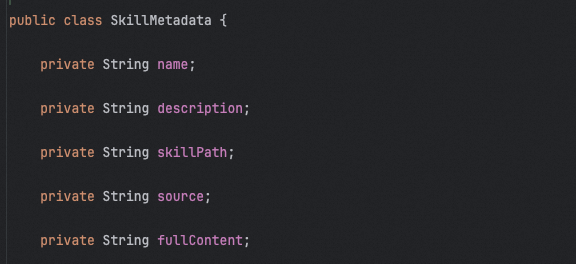
数据模型是 SkillMetadata,包含 name(技能名)、description(描述)、skillPath(技能目录路径)、source(来源,区分 “user” 还是 “project”)、fullContent(SKILL.md 去掉 frontmatter 后的正文)。


Skill 的发现与注册

Skill 的注册中心抽象为 SkillRegistry 接口,核心方法包括 get(name)listAll()readSkillContent(name)reload()getSkillLoadInstructions()getSystemPromptTemplate()


框架提供了两个主要实现:


Column 1 Column 2 Column 3
实现 来源 特点
FileSystemSkillRegistry 文件系统目录 支持 user/project 两级,project 覆盖同名 user Skill
ClasspathSkillRegistry classpath / JAR 兼容开发环境和 JAR 生产环境


FileSystemSkillRegistry 从文件系统加载技能,默认扫描两个目录——用户级目录 ~/saa/skills(全局技能)和项目级目录 ./skills(项目特定技能)。加载时项目级技能会覆盖同名的用户级技能,实现了优先级机制。


1
2
3
4
5
6
7
8
9
@Override
protected void loadSkillsToRegis
try() {
Map<String, SkillMetadata> mergedSkills = new Hash
Map<>();
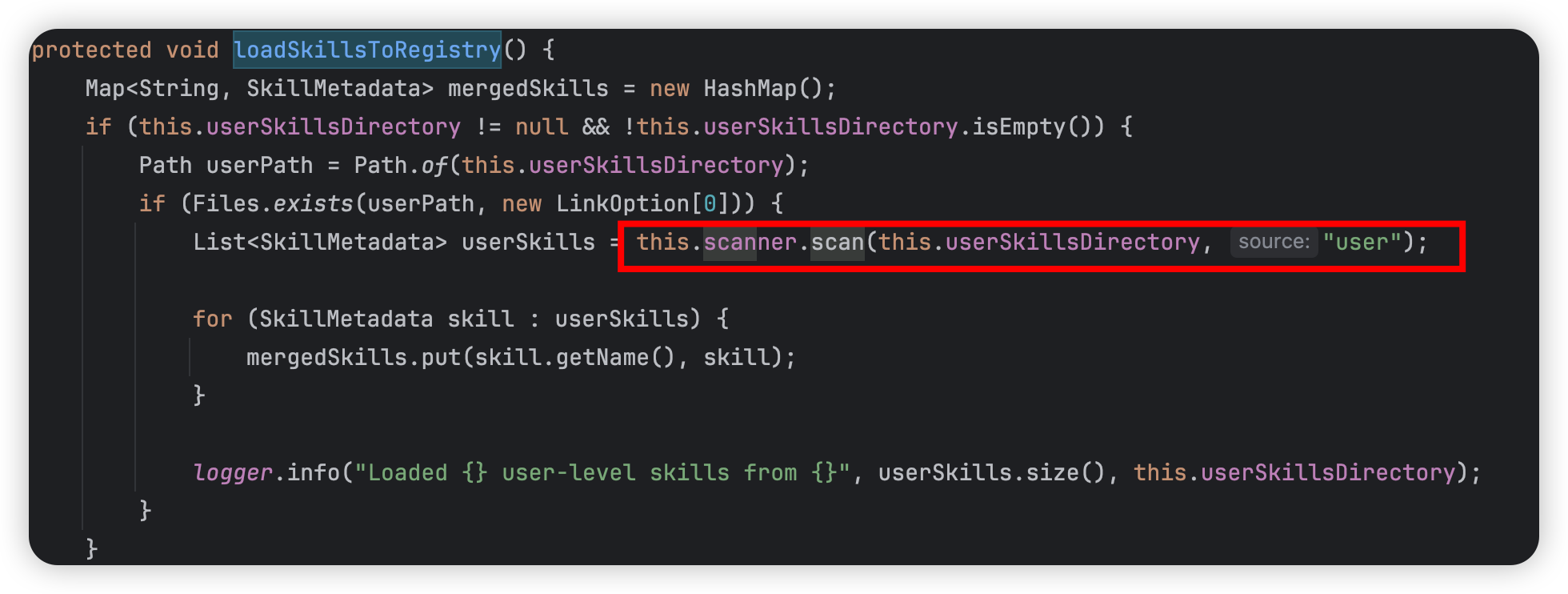
// 第一步:加载用户级 Skill(默认 ~/saa/skills) if (userSkillsDirectory != null) { List<SkillMetadata> userSkills = scanner.scan(userSkillsDirectory, "user"); for (SkillMetadata skill : userSkills) { mergedSkills.put(skill.getName(), skill); } }
// 第二步:加载项目级 Skill(默认 ./skills) // 同名 Skill 会覆盖用户级,实现优先级合并 if (projectSkillsDirectory != null) { List<SkillMetadata> projectSkills = scanner.scan(projectSkillsDirectory, "project"); for (SkillMetadata skill : projectSkills) { mergedSkills.put(skill.getName(), skill); } }
this.skills = mergedSkills;
}


底层使用 SkillScanner 遍历目录、读取 SKILL.md、解析 YAML frontmatter,同时按照 Agent Skills 规范(agentskills.io/specification)校验名称格式(小写字母+数字+连字符,最长 64 字符)和描述长度(最长 1024 字符)。


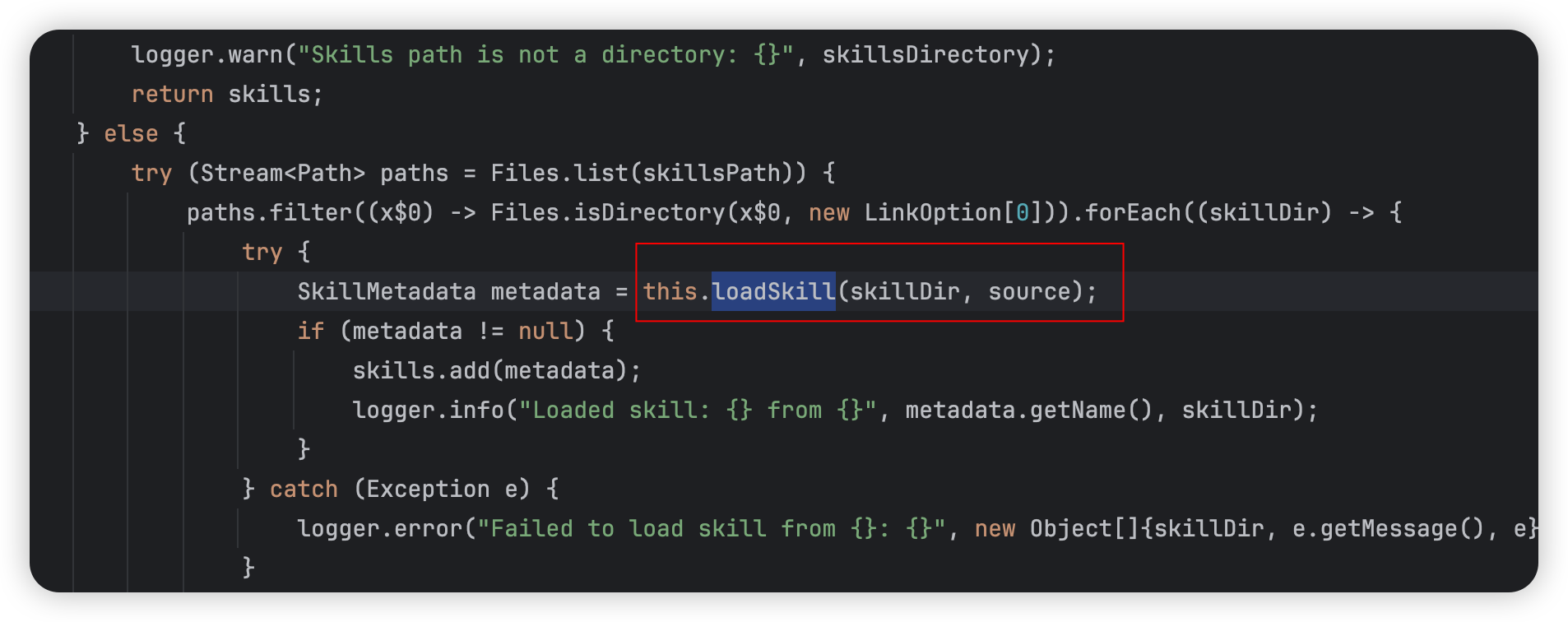
scan方法会调用同个类中的loadSkill方法来加载一个Skill:


1
2
3
4
5
6
7
8
9
10
11
12
13
14
15
public SkillMetadata loadSkill(Path skillDir, String source) {
Path skillFile = skillDir.resolve("SKILL.md");
if (!Files.exists(skillFile)) {
return null; }
String content = Files.read
String(skillFile);
Map<String, Object> frontmatter = parseFrontmatter(content);
String name = (String) frontmatter.get("name");
String description = (String) frontmatter.get("description");
// 校验名称格式(小写+数字+连字符,最长64字符) String directoryName = skillDir.getFileName().toString(); validateSkillName(name, directoryName, skillFile);
// 校验并截断描述长度(规范:最大1024字符) if (descriptionStr.length() > MAX_SKILL_DESCRIPTION_LENGTH) { descriptionStr = descriptionStr.substring(0, MAX_SKILL_DESCRIPTION_LENGTH); }
// 去除 frontmatter,保留正文 String fullContent = removeFrontmatter(content);
return SkillMetadata.builder() .name(name) .description(descriptionStr) .skillPath(skillDir.to
String()) .source(source) .fullContent(fullContent) .build();
}


ClasspathSkillRegistry 则从 classpath(如 resources/skills)加载技能,同时兼容开发环境(文件系统)和生产环境(JAR 包)。如果是 JAR 环境,会创建 JAR FileSystem 读取资源,并将技能资源拷贝到 basePath(默认 /tmp)以便后续用普通文件路径访问,同时缓存 JAR 中的 SKILL.md 内容。


Skill 的执行原理——“渐进式披露”


SAA 的 Skill 机制借鉴了 Claude Code 的 “Agent Skills” 理念,核心哲学是不把所有 Skill 的完整内容一股脑塞进 System Prompt,而是采用两阶段加载的方式。


第一阶段只把每个 Skill 的轻量级摘要信息(名称 + 描述 + 路径)注入到System Prompt中,让 LLM 知道有哪些能力可用;


在每次 LLM 调用前,通过 Advisor 或 Interceptor 机制,把所有已注册技能的简要信息(name + description + 路径)拼接成一段文本,追加到系统消息(System Message)中。这段文本还包含了如何使用 read_skill 工具的说明。LLM 看到的只是一个概览清单,并不包含每个技能的完整指令。


1
2
//FileSystemSkillRegistry
public static final String DEFAULT_SYSTEM_PROMPT_TEMPLATE = """ ## Skills System You have access to a skills library that provides specialized capabilities and domain knowledge. All skills are stored in a Skill Registry with a file system based storage. ### Available Skills {skills_list} ### How to Use Skills (Progressive Disclosure) Skills follow a **progressive disclosure** pattern - you know they exist (name + description above), but you only read the full instructions when needed: 1. **Recognize when a skill applies**: Check if the user's task matches any skill's description 2. **Read the skill's full instructions**: The skill list above shows the exact skill id to use with `read_skill` 3. **Follow the skill's instructions**: SKILL.md contains step-by-step workflows, best practices, and examples 4. **Access supporting files**: Skills may include Python scripts, configs, or reference docs - use absolute paths #### How to Read The Full Skill Instruction You are currently using the file system based Skill Registry. Please follow the skill loading guidelines below: {skills_load_instructions} **Important:** - **For SKILL.md files (skill instructions)**: Always use `read_skill` to read skill instructions. Do not attempt to access SKILL.md files through other methods. - **For other supporting files that skill uses (scripts, references, etc.)**: You may use other appropriate tools to read or access these files as needed, always use absolute paths from the skill list. #### When to Use Skills - When the user's request matches a skill's domain (e.g., "research X" → web-research skill) - When you need specialized knowledge or structured workflows - When a skill provides proven patterns for complex tasks #### Skills are Self-Documenting - Each SKILL.md tells you exactly what the skill does and how to use it - The skill list above shows the full path for each skill's SKILL.md file #### Executing Skill Scripts Skills may contain Python scripts or other executable files. Always use absolute paths from the skill list. ### Example Workflow User: "Can you research the latest developments in quantum computing?" 1. Check available skills above → See "web-research" skill with its skill id 2. Read the skill using the id shown in the list 3. Follow the skill's research workflow (search → organize → synthesize) 4. Use any helper scripts with absolute paths Remember: Skills are tools to make you more capable and consistent. When in doubt, check if a skill exists for the task! """;

第二阶段当 LLM 判断某个 Skill 与用户请求相关时,主动调用 read_skill 工具来读取该 Skill 的完整 SKILL.md 指令。这样做的好处是避免了 Token 浪费,同时保持了灵活的可扩展性。


框架向 LLM 注册了一个名为 read_skill 的 Tool(由 ReadSkillTool 实现)。当 LLM 判断用户请求匹配某个技能时,它会主动调用 read_skill(skill_name) 来获取该技能的完整 SKILL.md 内容。这个 Tool 内部调用 SkillRegistry.readSkillContent(name),从注册中心读取并返回去掉 frontmatter 的正文。LLM 拿到完整指令后,再按照技能文档中的步骤去执行。


这种设计的好处是节省了 token 开销——只有真正需要用到的技能才会被完整加载,而不是在每次请求中都把所有技能的详细文档一股脑塞进去。


两条集成路径

框架提供了两种方式将 Skill 能力集成到 AI 应用中:


路径一:Spring AI Advisor 模式(适用于 ChatClient)。


✅SpringAI中如何使用Skill?(ChatClient)

前面我们基于Agent继承了Skill,这一期讲讲直接用ChatClient如何集成。 1、增加依赖,增加skill、修改Skill.md、简历上传到minio、发起请求、输出结果等步骤和上一节课程一样,不重复了。 开发LLM相关代码 我

LLMentor


SpringAiSkillAdvisorSkillPromptAugmentAdvisor 都实现了 Spring AI 的 BaseAdvisor 接口。


1
2
3
4
5
6
7
8
9
10
@Override
public ChatClientRequest before(ChatClientRequest chatClientRequest, AdvisorChain advisorChain) {
// 加载/重新加载 Skill 注册信息 loadSkillsToRegistry();
List<SkillMetadata> skills = skillRegis
try.listAll();
if (skills.isEmpty()) {
return chatClientRequest; }
// 构建 Skill 提示词并追加到 System Message String skillsPrompt = buildSkillsPrompt(skills, skillRegistry, skillRegistry.getSystemPromptTemplate()); SystemMessage systemMessage = chatClientRequest.prompt().getSystemMessage(); SystemMessage enhanced = enhanceSystemMessage(systemMessage, skillsPrompt);
return chatClientRequest.mutate() .prompt(chatClientRequest.prompt().augmentSystemMessage(enhanced.getText())) .build();
}

它们在 before() 方法中完成技能列表的注入——reload 注册中心、获取技能列表、构建技能 prompt、增强系统消息。after() 方法不做任何处理。这种方式适合直接用 ChatClient 的场景。


路径二:Agent Hook + Interceptor 模式(适用于 ReactAgent)。


✅SpringAI中如何使用Skill?(Agent)

前面我们基于Qoder开发了一个帮我们做简历评估的Skill,我们接着把他集成到我们的应用代码中我们自己开发的Agent中。 Spring AI本身是不支持Skill的,但是Spring AI Alibaba 1.1.2版本发布了,他是支持

LLMentor


SkillsAgentHook 是一个 AgentHook,标注了 @HookPositions(HookPosition.BEFORE_AGENT),在 Agent 执行前触发。


1
2
3
4
5
6
7
8
9
10
11
12
13
14
15
16
17
18
19
20
21
@HookPositions(HookPosition.BEFORE_AGENT)
public class SkillsAgentHook extends AgentHook {
private final SkillRegis
try skillRegis
try;
private final ToolCallback readSkillTool;
private final Map<String, List<ToolCallback>> groupedTools;

@Override public CompletableFuture<Map<String, Object>> beforeAgent(OverAllState state, RunnableConfig config) {
if (autoReload) {
skillRegis
try.reload(); }
return CompletableFuture.completedFuture(Map.of()); }

@Override public List<ModelInterceptor> getModelInterceptors() {
return List.of( SkillsInterceptor.builder() .skillRegis
try(this.skillRegis
try) .groupedTools(this.groupedTools) .build()); }

@Override public List<ToolCallback> getTools() {
return List.of(readSkillTool); // 暴露 read_skill 工具给 Agent }}


它做了三件事:

(1)如果开启了 autoReload,在 beforeAgent 中重新加载 Skill;

(2)通过 getTools() 方法暴露 read_skill 工具给 Agent;

(3)通过 getModelInterceptors() 自动创建并注册 SkillsInterceptor。


SkillsInterceptor 是一个模型拦截器,在每次 LLM 调用前执行 interceptModel 方法。它先通过 buildSkillsPrompt 将 Skill 列表注入 System Message;


1
2
3
4
5
6
7
8
9
10
@Override
public ModelResponse interceptModel(ModelRequest request, ModelCallHandler handler) {
List<SkillMetadata> skills = skillRegis
try.listAll();
if (skills.isEmpty()) {
return handler.call(request); }
// 1. 扫描历史消息,提取 read_skill 调用的 skill_name Set<String> readSkillNames = extractReadSkillNames(request.getMessages());
// 2. 根据 skill_name 注入关联的动态工具 List<ToolCallback> skillTools = new ArrayList<>(request.getDynamicToolCallbacks()); for (String skillName : readSkillNames) { List<ToolCallback> toolsForSkill = getGroupedTools().get(skillName); if (toolsForSkill != null) skillTools.addAll(toolsForSkill); }
// 3. 注入 Skill 列表到 System Prompt String skillsPrompt = buildSkillsPrompt(skills, skillRegistry, skillRegistry.getSystemPromptTemplate()); SystemMessage enhanced = enhanceSystemMessage(request.getSystemMessage(), skillsPrompt);
// 4. 构建增强后的请求 return handler.call(ModelRequest.builder(request) .systemMessage(enhanced) .dynamicToolCallbacks(skillTools) .build());}


同时它还支持 动态工具注入——扫描对话历史中的 AssistantMessage,如果发现 LLM 此前调用过 read_skill 工具读取了某个 Skill,就从 groupedTools 中找到该 Skill 关联的专用工具,添加到 dynamicToolCallbacks 中。这意味着 LLM 读取某个 Skill 后,该 Skill 附带的工具能力会自动解锁。


1
2
3
4
5
6
7
8
9
10
11
12
private Set<String> extractReadSkillNames(List<Message> messages) {
Set<String> names = new LinkedHash
Set<>();
for (Message message : messages) {
if (!(message instanceof AssistantMessage am) || !am.hasToolCalls()) continue;
for (AssistantMessage.ToolCall toolCall : am.getToolCalls()) {
if (!ReadSkillTool.READ_SKILL.equals(toolCall.name())) continue;
String skillName = parseSkillNameFromArguments(toolCall.arguments());
if (skillName != null) names.add(skillName); } }
return names;
}

ReadSkillTool 是一个 BiFunction<ReadSkillRequest, ToolContext, String>,被包装成 Spring AI 的 ToolCallback。LLM 调用它时传入 skill_name 参数,它就去 SkillRegistry.readSkillContent(name) 读取对应 SKILL.md 的完整内容并返回。


1
2
3
4
5
6
7
8
9
10
public class ReadSkillTool implements BiFunction<ReadSkillRequest, ToolContext, String> {
public static final String READ_SKILL = "read_skill";
private final SkillRegis
try skillRegis
try;

@Override public String apply(ReadSkillRequest request, ToolContext toolContext) {
if (request.skillName == null || request.skillName.isEmpty()) return "Error: skill_name is required";
// 从 SkillRegistry 读取完整内容 String content = skillRegistry.readSkillContent(request.skillName); return content; }
// LLM 调用时的请求结构 public static class ReadSkillRequest { @JsonProperty(required = true, value = "skill_name") @JsonPropertyDescription("The name of the skill to read") public String skillName; }}


完整执行流程

用一个具体场景来串联:假设用户问 “帮我写一个查询上月消费超过 1000 元客户的 SQL”。

  1. 初始化阶段ClasspathSkillRegistry(或 FileSystemSkillRegistry)在 Bean 创建时扫描 skills/ 目录,解析每个子目录下的 SKILL.md frontmatter,构建 SkillMetadata 并注册到内存 Map 中。

  2. Agent 调用前SkillsAgentHook.beforeAgent() 触发,如果配置了 autoReload 则重新扫描目录。

  3. 模型调用前SkillsInterceptor.interceptModel() 被调用,从 SkillRegistry 获取所有 Skill 列表,格式化成类似 "**User Skills:**\n- **sql-schema**: SQL数据库表结构专家 → MUST use read_skill tool..." 的文本,追加到 System Message。同时 read_skill 工具已经被注册到 Agent 的可用工具列表中。

  4. LLM 第一轮推理:LLM 看到系统提示中列出的 Skill 列表,发现 “sql-schema” Skill 与当前请求匹配,于是决定调用 read_skill({"skill_name": "sql-schema"}) 工具。

  5. 工具执行ReadSkillTool.apply() 收到请求,调用 skillRegistry.readSkillContent("sql-schema"),读取并返回该 Skill 的 SKILL.md 完整内容(去掉了 frontmatter 的纯指令部分)。

  6. 动态工具注入:在下一轮 interceptModel 调用中,SkillsInterceptor 扫描对话历史,发现刚才有 read_skill 的 tool call,从 groupedTools 中找到 “sql-schema” 关联的专用工具(如果有的话),将它们添加到 dynamicToolCallbacks

  7. LLM 后续推理:LLM 拿到了完整的 Skill 指令和可能新增的工具,按照 SKILL.md 中的工作流指引来完成用户请求。